

It’s critical that MSP clients understand the importance of cybersecurity. But if your QBRs overflow with technical charts and stats, you’re likely losing the room before the conversation starts. Pummeling clients with data makes them tune out because they can’t connect security jargon to their business goals. To become a strategic partner, MSPs need to bridge this gap.
ScalePad’s recent webinar, Creating the Right Business Case for Cybersecurity, brought experts Chris Day (CEO at ScalePad), Dan Candee (CEO at Cork), and Bryson Byrd (Cybersecurity Advisor at Huntress) together to share insights and practical tips to help MSPs move from data overload to meaningful cybersecurity conversations.
Below, we’re breaking down their best advice and actionable strategies for translating complex cyber risk reports into language your clients will understand—including a one-page template for summarizing key points with executives.
It’s vital that clients understand that cybersecurity is about more than just software. Dan Candee shared an example of a construction company that was doing everything right and was fully protected with a solid security stack. However, a partner architecture firm within their supply chain was breached. The attackers sent fraudulent invoices from the firm’s legitimate email address, resulting in massive ACH wire transfer fraud against the construction company.
How to Lead Boardroom-Ready Cyber Conversations
You can’t just report stats alone and expect clients to “get it”—you need to explain what they mean in business terms. The key is making cyber risk real by connecting it to what your clients care about.
- Speak Their Language: Whether they’re accountants, architects, or bakers, your clients care most about running their business and protecting their reputation. As Dan Candee put it: “Speak the language of our clients, which in my language is really donuts and cupcakes.” Tie every security conversation to these core business needs, not technical features.
- Use AI as the Strategic Wedge: Every SMB owner is curious about AI right now. Chris Day suggested using an AI Readiness Assessment as a wedge to discuss security. By linking new tech initiatives to smart security practices, you move from “fixing IT” to enabling innovation.
- Tie Security to Operations: As Bryson Byrd highlights, cyber resilience is operational resilience. Instead of chasing “incidents of fear,” find where security supports business trends. Look at who’s excelling in your client’s industry. Are they using AI? Are they more efficient? Show how a secure foundation enables them to match those patterns. When you map security to operational outcomes, you become a partner in long-term growth.
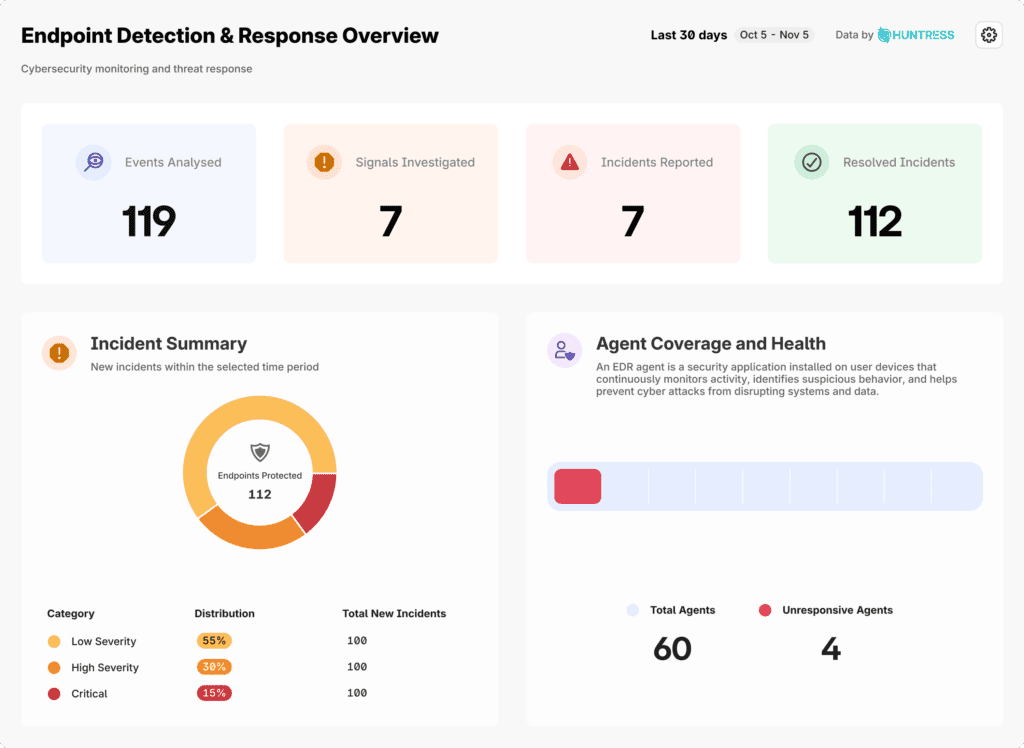
The Anatomy of a One-Page Boardroom Snapshot
As Chris noted, clients tend to archive (or ignore) massive reports because they lack a “steering mechanism.” To be effective, your one-pager shouldn’t just be a summary of past work; it should be a gap analysis that connects security outcomes to business goals.
Stop the Data Dump, Start Guiding the Conversation
Your clients don’t want to become cybersecurity experts—they want to stay in business. By moving from technical data dumps to high-impact, business-aligned snapshots, you’ll help clients truly understand their security posture.
The benefit isn’t just cleaner reporting: it’s faster decision-making, better investment, and deeper trust. Show them a roadmap to resilience, and you’ll become more than an IT provider—you’re a strategic partner protecting their current assets and supporting their future.
For more in-depth strategies from Chris, Dan, and Bryson, watch the full webinar now.
Your clients don’t want a 40-page PDF—they want a plan. Lifecycle Manager automatically consolidates security insights from Huntress, Cork, and your other partners into boardroom-ready snapshots. Walk into every QBR ready to lead the conversation.