

A cybersecurity compliance program is an essential piece of your clients’ infrastructure — one that helps safeguard their data and protect their businesses against cyberattacks. As an MSP, it’s your responsibility to help your clients develop, implement, and manage their compliance program.
Cybersecurity Compliance Overview
With the massive increase in cyberattacks, data breaches, and ransomware against small businesses over the last few years, cybersecurity compliance programs have become a baseline requirement for your clients’ infrastructure. Compliance is integral to their survival, which makes it a must-have offering for your MSP.
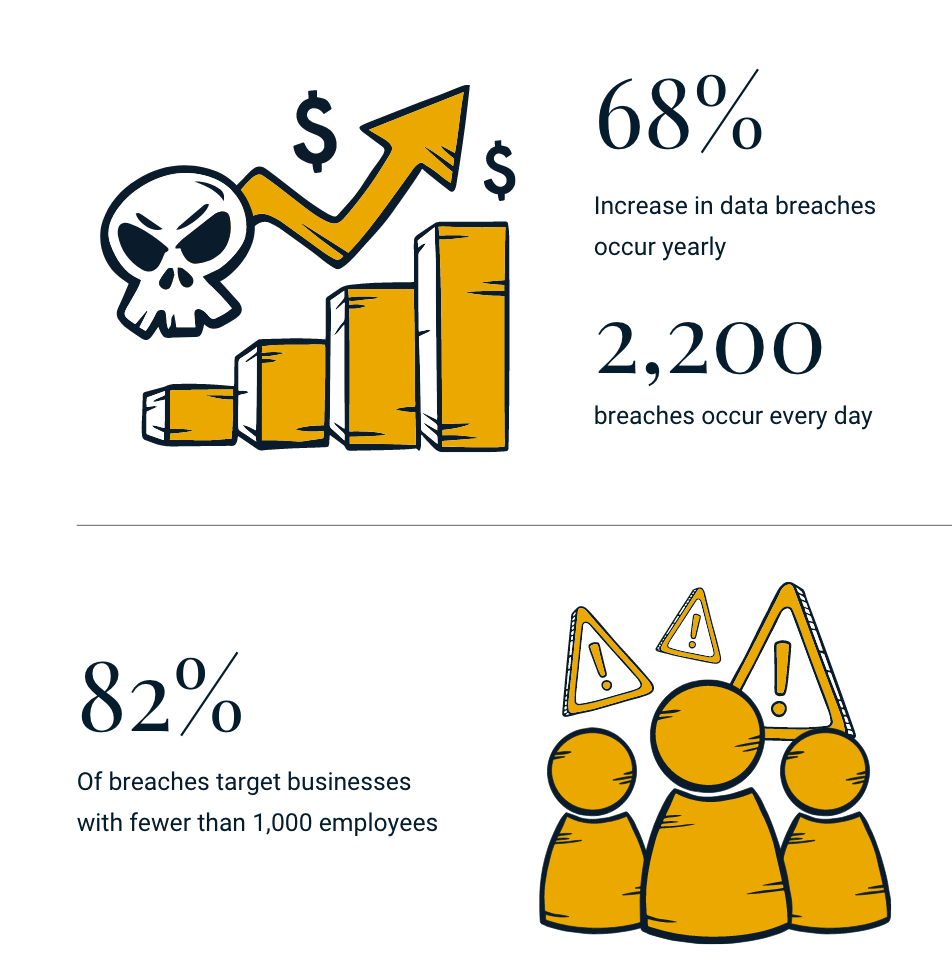
In 2024, data breaches are up 68% compared to 2023 with over 2,200 breaches occurring daily. And even more concerning is that 82% of breaches target small businesses with fewer than 1,000 employees.
Simply put, your clients won’t survive without a cybersecurity compliance program in place, and it’s your responsibility to help them implement this program. If your MSP doesn’t already offer a compliance solution, you’re falling behind.
But compliance is a big subject — it’s easy to feel overwhelmed if you’re just getting started. This raises a lot of questions for MSPs, like:
All of these questions are valid. But yes, you really do have to do this. Compliance isn’t something you can put off. It won’t work itself out. And every day you push it back is another day your clients’ businesses are at risk.
We know, we know… Many MSPs simply don’t have the time or the resources to learn about compliance, let alone offer it as a brand-new service. That’s why we want to help you develop a cybersecurity compliance program — so you can protect your own business and offer compliance and risk management training to your clients.
By becoming a Compliance as a Service provider, you can elevate your MSP’s compliance offering, create new revenue, and build trust with your clients by protecting their infrastructure.
Importance of Cybersecurity Compliance
Cybersecurity compliance helps safeguard businesses from the financial losses and legal consequences of data breaches. Bad actors increasingly target small businesses, as they often lack the resources and expertise to defend themselves properly.
That’s where your MSP comes in. As a trusted technical advisor, you must communicate the value of cybersecurity and compliance services to your clients — it’s your role to help them protect themselves against cyber threats. MSPs are uniquely positioned to safeguard clients against cyberattacks and help improve their cybersecurity posture, as you already manage most of your client’s IT infrastructure.
By adding cybersecurity, compliance, and risk management training services to your baseline offering, you can help protect your clients’ data, minimize their risk of financial loss, and empower them to scale with confidence.
Types of Data Subject to Compliance and Cybersecurity Standards
There are a wide variety of compliance frameworks and industry standards in place to help your clients safeguard their data based on industry, region, and services offered. These compliance frameworks guide businesses through the compliance process, helping identify areas that must be secured to adequately protect data. A few examples of data subject to compliance regulations include:
As an MSP, providing compliance training to your clients can help secure their data. Not only will this protect their business, but it will further cement your role as their trusted technology advisor.
To discover which specific compliance frameworks are relevant to your clients, check out our Compliance Framework ID breakdown in the Compliance Boot Camp (Chapter 2).
How to Start a Cybersecurity Compliance Program
This step-by-step process outlines how to create a cybersecurity compliance program. But you have to walk the talk! Roll this out internally first, then follow the same process to deliver elevated compliance services to your clients.
- 1. Asset Audit: Determine which assets (e.g. data, systems, hardware, software) are critical to business operations and client services.
- 2. Threat Identification: Identify external threats and internal vulnerabilities that could compromise business assets (e.g. natural disasters, critical outages, cyberattacks, human error).
- 3. Risk Analysis: Evaluate the likelihood of each threat occurring, including its impact, potential damage, and estimated downtime (seeChapter 4in the Compliance Boot Camp to learn more about the Risk Assessment Matrix)
- 4. Risk Prioritization: Prioritize risks based on their likelihood of occurrence and level of impact on the business.
- 5. Risk Mitigation: Develop strategies to reduce and mitigate identified risks, including: Compliance framework implementation Disaster recovery planning Backup solutions Redundancy measures System updates Security controls
- 6. Ongoing Monitoring: Continuously monitor for threats and adapt risk mitigation strategies as necessary; regularly review risk assessments to account for changes to business operations and evolving threats.
- 7. Incident Response Protocol: Create a protocol to follow during a cyber incident so everyone in your organization knows how to address these events and mitigate the damage.
- 8. Compliance Trainingand Awareness: Build a culture of compliance within your organization to ensure all employees and stakeholders are aware of security protocols and potential threats.
- 9. Stakeholder Communication: Communicate potential risks and risk mitigation techniques to stakeholders to help build trust and enroll everyone in the risk management process. Once you wrap your head around the compliance process and establish a system that works for your team, it’s easy to replicate. From there, you can build out your Compliance as a Service offering and become a trusted compliance partner for your clients. The result is a new revenue stream and increased client trust.